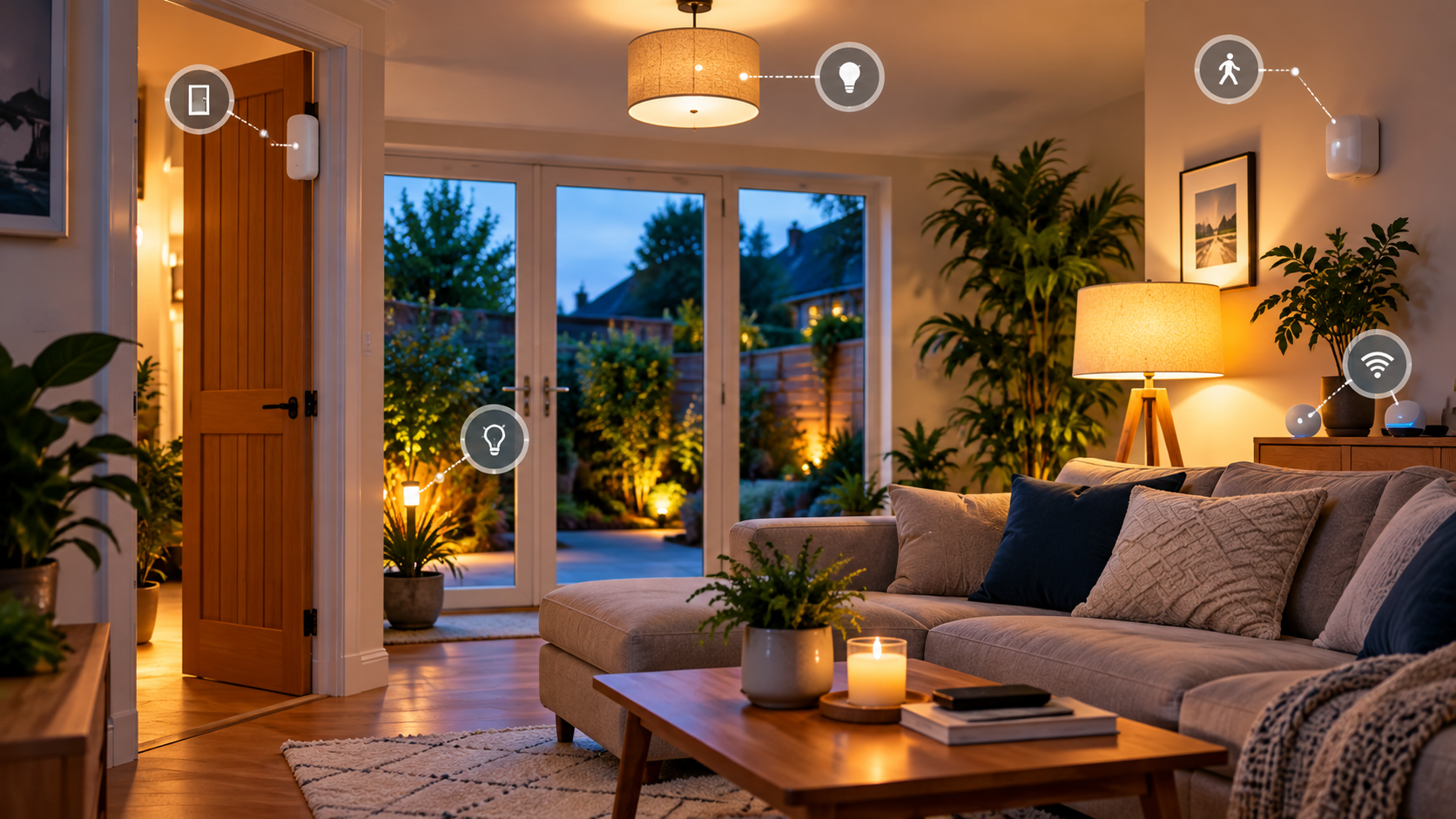
A smart home doesn’t have to start with an expensive control system or dozens of new devices.
Some of the most useful improvements are surprisingly small. A sensor on a door, a plug behind a lamp or a device that knows when somebody is in a room can solve everyday annoyances without making your home more complicated.
Here are seven simple places to start.
1. Make a lamp automatic
A smart plug is one of the easiest ways to make an ordinary device smarter.
Plug a lamp into one and you can have it switch on automatically in the evening, turn off at bedtime or control it from your phone.
You could go a step further and combine it with a presence sensor so the lamp comes on when somebody enters the room.
No smart lamp required.
2. Know if you’ve left a door open
A tiny wireless sensor can tell whether a door or window is open or closed.
That could mean checking your phone to see whether the back door is closed, getting a notification if the side gate opens while you’re away, or receiving a reminder when something has been left open.
They’re small, battery powered and can be fitted to doors, windows, gates and even sheds.
3. Have lights come on when you need them
Automatic lighting doesn’t have to mean lights switching on every time something moves.
A good setup can take into account whether somebody is actually in the room, the time of day and even how bright it already is.
Walk into the bathroom at night and a light could come on gently. Leave the room and it can switch itself off again.
4. Use presence instead of just motion
Traditional motion sensors are great at detecting somebody walking past them. They’re not always so good when you sit down and stop moving.
Presence sensors can detect much smaller movements and, depending on the device, can tell that somebody is still in a room.
That makes them particularly useful in living rooms, bathrooms and home offices where you don’t want the lights switching off while you’re still there.
5. Keep an eye on temperature and humidity
Small wireless sensors can continuously monitor conditions around your home.
A humidity sensor in a bathroom could tell you when moisture levels are getting high. Temperature sensors can help identify rooms that are consistently warmer or colder than the rest of the house.
Once connected to other smart devices, those readings can also trigger actions automatically.
6. Make your home react when you go out
Several simple devices become much more useful when they work together.
When you leave home, your setup could automatically switch off selected lights and plugs while keeping door and window sensors active.
If something opens while you’re away, you could receive a notification on your phone.
When you return, selected devices can become available again.
7. Start with one thing that annoys you
This is probably the best way to start.
Don’t begin by asking, “How do I make my whole house smart?”
Think about something you’d genuinely like to improve.
Maybe you keep forgetting whether the side gate is closed. Perhaps you’d like a hallway light to come on automatically at night. Maybe there’s a lamp you switch on and off every evening.
Start there.
A smart home can grow gradually, one useful device at a time. And if you eventually have lots of devices around your home, they can be brought together into a larger system such as SmartHomeOS.
Not sure which device you need?
You don’t need to know.
Tell us what you’d like your home to do and we can recommend suitable devices, install them and set everything up for you.